10/30/2026
How Closed Systems Will Allow Distant Space Travel
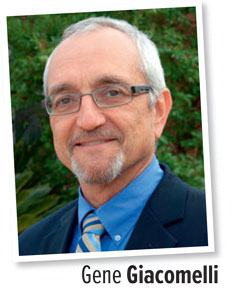
Dr. Gene Giacomelli
As surviving beyond the Earth requires closed, sustainable systems for life support, we must bring our environment with us. The robots can go without us—but where’s the fun in that?
Biosphere 2 (B2) located near Tucson, Arizona, was ahead of its time when in 1991 eight people lived inside of this 3.2-acre facility for two years. B2 was built to shelter and provide life support to its habitants within a closed, circular biological system composed of complementary Earthly processes. It required only sunshine and electrical power for heating and cooling, plant growth, water circulation and treatment, and appliances. It remains without comparison the ultimate scientific approach to achieving large-scale, long-term sustainable human life support in a controlled environment.
At 35 years old, B2 is a highly productive climate change research facility managed by the University of Arizona. Activities (without inhabitants) range from rebuilding coral reefs and determining rainforest survivability with ever-increasing water and air temperatures to monitoring the hydrogeological evolution of crushed basalt rock to public walking tours of the glass enclosure.
The B2 experiment was successful at many levels. The design required integrated bioenvironmental processes of a closed biological system, with expectations that even with its limited storage/buffer space that the natural biocycles would harmonize their consumption and production of resources to maintain continuous cycling. Consider Earth with its land, water and air masses having enormous storage/buffer space (197 million square miles surface area), but only 0.0048 square miles with B2.
Today, the open, but controlled, environment B2 hosts a mature rainforest, a saltwater ocean, coastal fog desert and landscape soil development project within four separate biomes (specific climate and vegetation zones). This creates a unique enclosed (not closed) controlled environment, allowing for studies of complex, long-term ecological and biological responses to the vegetation, ocean waters and soils. An example of the knowledge learned is the stability of the 700,000-gallon ocean and coral reef, and the beneficial lack of competitive algae production even when the atmospheric CO2 concentration was elevated to 658 ppm, well above today’s 400 ppm. Coral 1, Algae 0.
The value of a second, separate “biosphere” operating within a controlled environment on our home planet remains an important study, not only for future travel off planet, but also for the understanding of and improvements to food production on Earth today, especially within CEA facilities such as greenhouses.
Enter Kai Staats, who began his research in human space exploration in 2017 with development of SIMOC, a computer simulation of a closed life support facility for human habitation. His vision was given physical form when he and his team restored the abandoned Test Module, the 1987 prototype for the Biosphere 2, for a return to human-in-the-loop closed system research.
The Space Analog for the Moon & Mars (SAM) grew to include a greenhouse with automated hydroponic plant production, Engineering Bay, Crew Quarters with kitchen, common area and sleeping accommodations, and an air pressure regulation module. Research and demonstration of bioregenerative life support included unique, dwarf varieties of tomato, wheat, quinoa and pea. The team built a working copy of the mechanical CO2 scrubber operating on ISS today to demonstrate hybrid machine/plant air revitalization. Use of an airlock and pressure suits took analog astronauts into the adjacent, geologically accurate Mars yard. However, it was the CEA hydroponic production of 144 dwarf sweet pea cultivars that consumed the CO2 of a person enclosed in SAM for 14 days, providing in return breathable oxygen, that demonstrated life support by bio-regeneration, the key to successful human space travel!
Three decades after the original B2 sealed experiments, SAM operated as a closed facility, meaning that only sunlight and electrical energy crossed the pressure vessel walls, and all resources, including air, water and food that were placed inside for each experiment, remained inside. The fundamentals of life support for the human inhabitants were monitored and maintained, thereby demonstrating the demands and challenges of supporting human life on inhabitable extreme locations such as the Moon and Mars.
These efforts also prove directly applicable to sustainable living on Earth. As Kai has often professed, “How we will live on Mars tomorrow is how we should be living on Earth today—aware of every breath we take, every drop of water we consume, and cognizant of the source and quality of our food.”
For this I am grateful to have known and consulted with Kai, as he with his team has successfully linked CEA to the long-term life support in space travel.
Onward! IG
Dr. Gene Giacomelli is a retired professor in Biosystems Engineering at University of Arizona and the founding director of the UA-Controlled Environment Agriculture Center. He can be reached at giacomel@ag.arizona.edu.