CEA in The New York Times
Just last week, The New York Times published an article about our industry titled “Vertical Farms Tried to Compete With Open Field Farming. It Isn’t Going Well.” Some of the content wasn’t much of a surprise. The article opens by noting that, despite raising close to a billion dollars each, indoor farming companies like Bowery Farming and AppHarvest are no longer in business. Much of this is attributed to a combination of shifting financial markets, unrealistic expectations about both the industry and farming more broadly, and a tendency to dive headfirst into large-scale operations.
That last point has always struck me as odd. Building systems to grow plants is something I’ve spent a lot of time on, both professionally and as a hobby. I can confidently say there are countless setups and ideas I’ve wanted to test. When I give advice on designing a grow setup, I always start with this question: how are you going to clean it and fix it? Only after that do you think about how to grow plants.
The NCERA-101 Growth Chamber Handbook is sacred to me. With that in mind, when I saw the scale of operations like AeroFarms and Plenty, I had a lot of questions. How much time and effort went into optimizing airflow? What about lighting strategy? And how did they plan for maintenance and future upgrades? It was encouraging to see controlled environment agriculture clearly defined in the article, along with a discussion of the ongoing boom in greenhouse production.
As a final point, Plenty’s chief executive, Dan Malech, questioned the market viability of premium lettuce. Of course, Plenty has since shifted production entirely to strawberries. So the question becomes: what crop is next for CEA?

New Berry in CEA
Strawberries have been the breakout crop in controlled environment agriculture, and attention is now shifting toward other high-value options. At Indoor Ag-Con, a panel explored what the next berry for CEA might be. One key takeaway was that strawberries fit relatively well into existing greenhouse production systems. In contrast, other berry crops will likely require fundamental redesigns, with systems built specifically around the biology and structure of each crop.
The Canadian company BeriTech aims to bring fresh berries to market during off-season windows. While the company is still fairly quiet about its plans, it has indicated a goal of beginning commercial operations within the next three years. Based on its website, blueberries appear to be the primary target.
The leading candidates for expansion into CEA include blueberries and bramble crops such as raspberries and blackberries. That interest is already showing up in the market. The New York Times recently reported on surging raspberry prices, though market volatility alone is rarely a sound foundation for long-term production decisions. The real constraint is biological. Unlike strawberries, these crops typically follow seasonal flowering and fruiting cycles. Similar to tree fruit, blueberries and brambles often require a dormancy period and exposure to cold temperatures to initiate flowering. If everbearing, indeterminate varieties can be developed, adoption in CEA could accelerate quickly.
If I had one thought to consider for breeders, it would be to look beyond the standard crops and consider bramble hybrids such as loganberries, marionberries or tayberries. Marketing matters. These fruits not only stand out to consumers, but CEA systems may be uniquely positioned to solve key production challenges, particularly around harvest timing and postharvest handling.

CEAIF Event
CEA and Indoor Farming (CEAIF) is hosting its sixth annual online event this May, bringing together growers, researchers and industry professionals focused on advancing controlled environment agriculture.
This year’s program centers on two core themes: Enhancing Operations and Performance and Optimizing Plant Growth. The event kicks off May 1, with full programming days on May 8 and May 22.
Attendance is expected to exceed 700 participants, with more than 300 organizations represented across the CEA space. Best of all, registration is free for producers, including greenhouse and indoor growers.
If you’re looking to stay current on where the industry is heading (or just want to see what others are actually doing), this is a solid event to plug into.
Learn more and sign up for the event here.
Fresh Start Produce
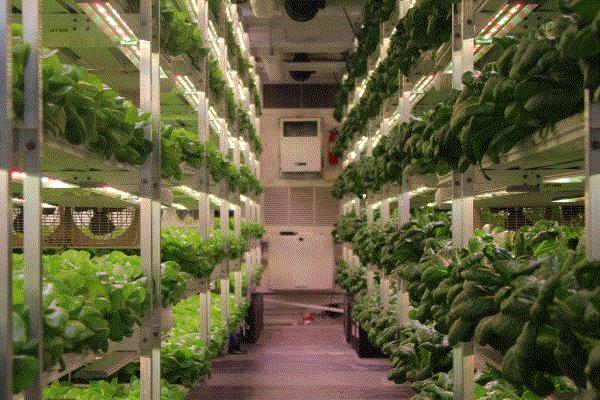
The Fresh Start Produce program has successfully began growing lettuce in seven shipping container farms at Camille Griffin Graham Correctional in South Carolina. This new program allows inmates to work in these container farms growing fresh produce to be used back at the correctional center, and two other prisons in the same complex.
With combined support of a grant, the state and an anonymous doner, Fresh Start Produce teaches inmates how to run the vertical farm, as well as provides $1450 once they leave prison. All aspects of running the farm are taught in the program, including food safety and running an agricultural business.
It’s great to see a technology like container farms make it easy to install, operate and ultimately make a difference in people’s lives. Read more about the story here.
Shipping container at Camille Griffin Graham Correctional in Columbia, S.C. (Photo by Skylar Laird/SC Daily Gazette)
OHCEAC 5th Annual CEA Conference
Registration is now open for the Ohio Controlled Environment Agriculture Center (OHCEAC) Annual CEA Conference, titled “New Crops in CEA.” And yes, that likely means berries are on the agenda. Based on the event materials, sessions are expected to cover not just berries, but also hops, spinach and even culinary mushrooms.
The conference is scheduled immediately after Cultivate’26, making it an easy add-on if you’re already planning to attend. If you can stick around for an extra day, this is a worthwhile extension.
The program will feature panel discussions with both industry leaders and academic experts, offering a mix of practical insight and research-driven perspectives.
Click the link here to register.

Taylor Farms Acquires Equinox Growers
Perhaps the most notable recent development is the acquisition of Equinox Growers by Taylor Farms. The purchase of a large-scale lettuce greenhouse by one of the country’s biggest salad producers marks a meaningful shift in how CEA fits into the broader food system.
Equinox operates a state-of-the-art greenhouse in Louisa, Virginia, and has only been growing for around 10 years. With around 10 acres in production, impact on the market has been immediate, highlighting how quickly well-executed CEA operations can scale and establish regional presence.
More than anything, this acquisition signals confidence. Not just in a single facility, but in the role CEA can play within established consumer packaged goods supply chains. That kind of vertical integration, from production to distribution, is something the industry has long aimed for.
If this model proves successful, it could accelerate similar investments and lead to a new wave of greenhouse development across the United States.
Read more about the acquisition here.



Dr. Jake Holley
Editor-at-Large
Inside Grower
This email received by 36,819 loyal readers!
Interested in advertising in Inside Grower? Contact Paul Black or Kim Brown and they'll show you how easy, effective and affordable it is.